
-
Our Businesses

- Sustainability
- Our Blogs
-
Careers
- About Us
- Contact Us


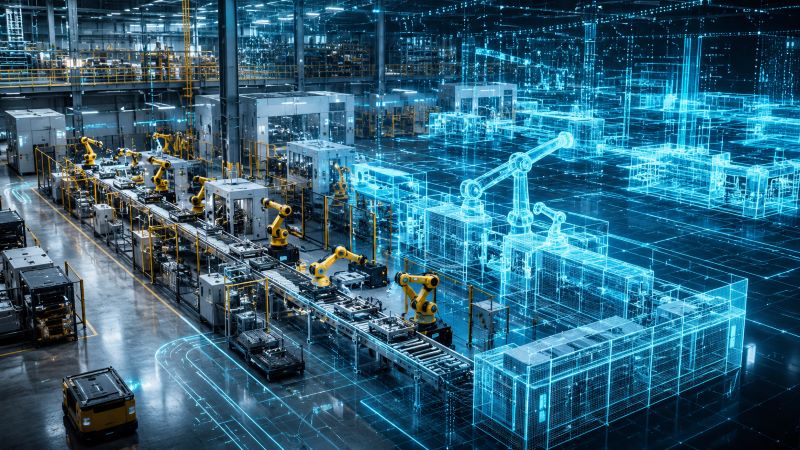
Emulate3D helps industries digitally bring mechanical designs to life by creating realistic, physics-based 3D models of automated systems. Instead of waiting for physical installation to identify design gaps, sequencing issues, control errors, or layout inefficiencies, teams can simulate and validate system behaviour in a virtual environment. This enables manufacturers, OEMs, system integrators, and plant teams to move from reactive problem-solving to proactive engineering.
Traditional automation design often involves multiple stages of physical testing, on-site modifications, and late-stage troubleshooting. These challenges can increase project timelines, create cost pressure, and cause delays during commissioning.
With Rockwell Automation Emulate3D, design and engineering teams can test new system concepts earlier in the project lifecycle. The software allows users to create a digital replica of machines, lines, or automated systems and connect them with control logic to check how they will perform in real-world scenarios.
This virtual approach supports better decision-making during the design stage. Teams can test layouts, identify potential bottlenecks, validate system flow, and make improvements before equipment is built or installed. As a result, businesses can reduce risk, minimize rework, and improve overall project efficiency.
One of the key strengths of Emulate3D Digital Twin Software is its ability to support virtual commissioning. By establishing early connections between machinery and control systems, teams can test automation logic in a realistic 3D environment before deployment.
This means potential control issues, sequencing errors, and operational challenges can be detected before they affect the actual production setup. For manufacturers, this can help reduce unwanted surprises during commissioning and support a smoother transition from design to operation.
Virtual commissioning also improves collaboration between mechanical, electrical, and controls teams. Instead of working in isolated stages, stakeholders can review system performance together, make informed changes, and ensure the automation system is aligned before implementation.
Rockwell Automation Emulate3D also supports faster-than-real-time 3D simulation, helping teams evaluate system layouts and production configurations more effectively. This is especially useful for complex manufacturing lines, warehouse automation systems, material handling operations, and high-speed production environments.
By simulating different design possibilities, businesses can understand how a system may perform under various conditions. They can test throughput, movement, flow, equipment interaction, and future line changes in a digital space without interrupting real production.
This makes Emulate3D a valuable tool not only for new projects but also for continuous improvement. Plant teams can use digital twin simulation to explore upgrades, validate expansion plans, and optimize production strategies with greater confidence.
Another major advantage of Emulate3D is its ability to support operator training. Industrial teams can use the virtual model as a safe training environment where personnel can understand system behaviour, practice procedures, and prepare for real operations without risk to people, equipment, or production.
This is particularly valuable when introducing new automation systems or making major changes to an existing line. Operators can become familiar with the system before it goes live, helping improve competency and reduce the possibility of operational errors.
Rockwell Automation is also taking digital twin technology further with Emulate3D Factory Test™, designed to support enterprise-scale virtual controls testing. This solution enables factory-scale Factory Acceptance Testing, allowing manufacturers to validate automation systems before deployment.
With capabilities such as multi-model orchestration, repeatable automated testing, fault simulation, and advanced full-factory visualization, Emulate3D Factory Test supports a more modern and scalable approach to automation validation.
For industries looking to improve automation outcomes, Emulate3D offers value across the complete design and commissioning lifecycle. It helps organizations:
• Build better systems through virtual design and prototyping
• Commission automation projects with greater confidence
• Improve production planning through 3D simulation
• Train operators in a safe and realistic virtual environment
• Reduce risk, rework, and production disruption
• Support better collaboration between engineering and plant teams
By combining realistic 3D simulation with Rockwell Automation’s strong industrial automation ecosystem, Emulate3D gives businesses a practical way to move toward smarter, more agile, and more future-ready manufacturing.
As industries continue to adopt digital engineering and smart manufacturing practices, digital twin technology is becoming an essential part of modern automation strategy. Rockwell Automation Emulate3D Digital Twin Software empowers teams to design better, test earlier, commission smarter, and improve production outcomes with greater confidence.
From virtual prototyping to operator training and factory-scale testing, Emulate3D helps transform automation planning into a more connected, efficient, and intelligent process.
For businesses focused on reducing project risk and improving industrial performance, Rockwell Automation Emulate3D is a powerful step toward the future of digital manufacturing.
We are always open to cooperation
and welcome new projects