
-
Our Businesses

- Sustainability
- Our Blogs
-
Careers
- About Us
- Contact Us


According to the International Federation of Robotics (IFR), global industrial robot installations reached over 553,000 units in 2022, marking a 5% growth compared to the previous year. This growth demonstrates the accelerating adoption of automation technologies across sectors such as automotive, electronics, pharmaceuticals, and logistics.
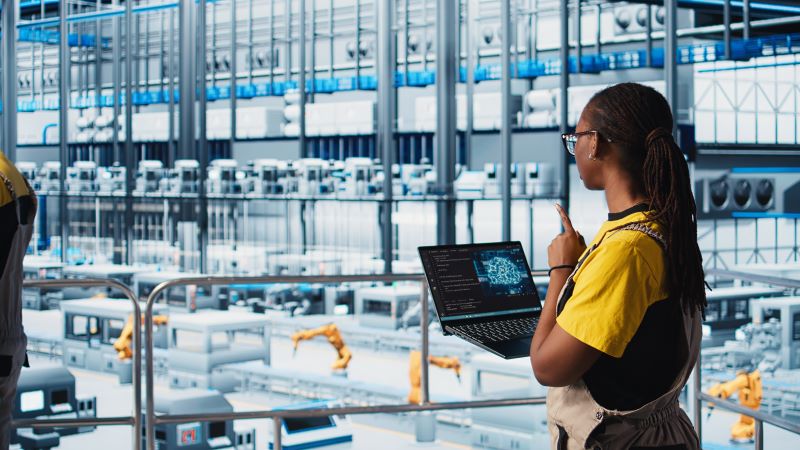
India is also experiencing rapid automation adoption. Government initiatives such as Make in India and Digital India are encouraging industries to modernize manufacturing facilities and adopt smart technologies to enhance productivity.
Automation systems such as PLCs, SCADA systems, industrial drives, sensors, and smart control panels allow industries to automate repetitive tasks while improving operational accuracy.
Several global events have accelerated automation adoption:
During the pandemic, industries faced labor shortages and supply chain disruptions. As a result, manufacturers began investing heavily in automation to reduce dependency on manual labor and maintain production continuity.
Global supply chain challenges forced industries to focus on smart manufacturing and predictive maintenance, ensuring factories could run efficiently with minimal interruptions.
Rising energy costs have pushed industries to adopt energy-efficient automation solutions, such as variable frequency drives (VFDs) and smart energy monitoring systems.
1. Increased Productivity
Automated systems can operate continuously with minimal downtime, enabling faster production cycles and improved output.
2. Improved Quality Control
Automation reduces human error and ensures consistent product quality.
3. Enhanced Workplace Safety
Robotic systems and automated processes help reduce human exposure to hazardous environments.
4. Data-Driven Decision Making
Automation systems generate valuable operational data that can be analyzed to optimize processes and predict maintenance needs.
| Factor | Traditional Manufacturing | Automated Manufacturing |
|---|---|---|
| Production Speed | Moderate | High |
| Human Error | High | Low |
| Operational Cost | Higher long term | Lower long term |
| Data Monitoring | Limited | Real-time analytics |
| Safety | Higher risk | Improved safety |
| Scalability | Difficult | Easily scalable |
Key technologies driving automation include:
• Industrial IoT sensors
• PLC and SCADA control systems
• Robotic automation
• Smart drives and motion control systems
• Predictive maintenance platforms
• Energy management systems
Companies like Rexel India provide advanced electrical and automation solutions that help industries implement these technologies effectively.
Industrial automation refers to the use of control systems, machines, and software to automate industrial processes and reduce manual intervention.
Industries such as automotive, pharmaceuticals, electronics, manufacturing, energy, and logistics benefit significantly from automation.
Initial investment can be high, but automation significantly reduces long-term operational costs and improves efficiency.
Automation replaces hazardous manual tasks with robotic systems, reducing workplace accidents.
We are always open to cooperation
and welcome new projects