
-
Our Businesses

- Sustainability
- Our Blogs
-
Careers
- About Us
- Contact Us


This guide explains the main types of industrial electrical panels, where they are used, and the best practices that ensure trouble-free operation.

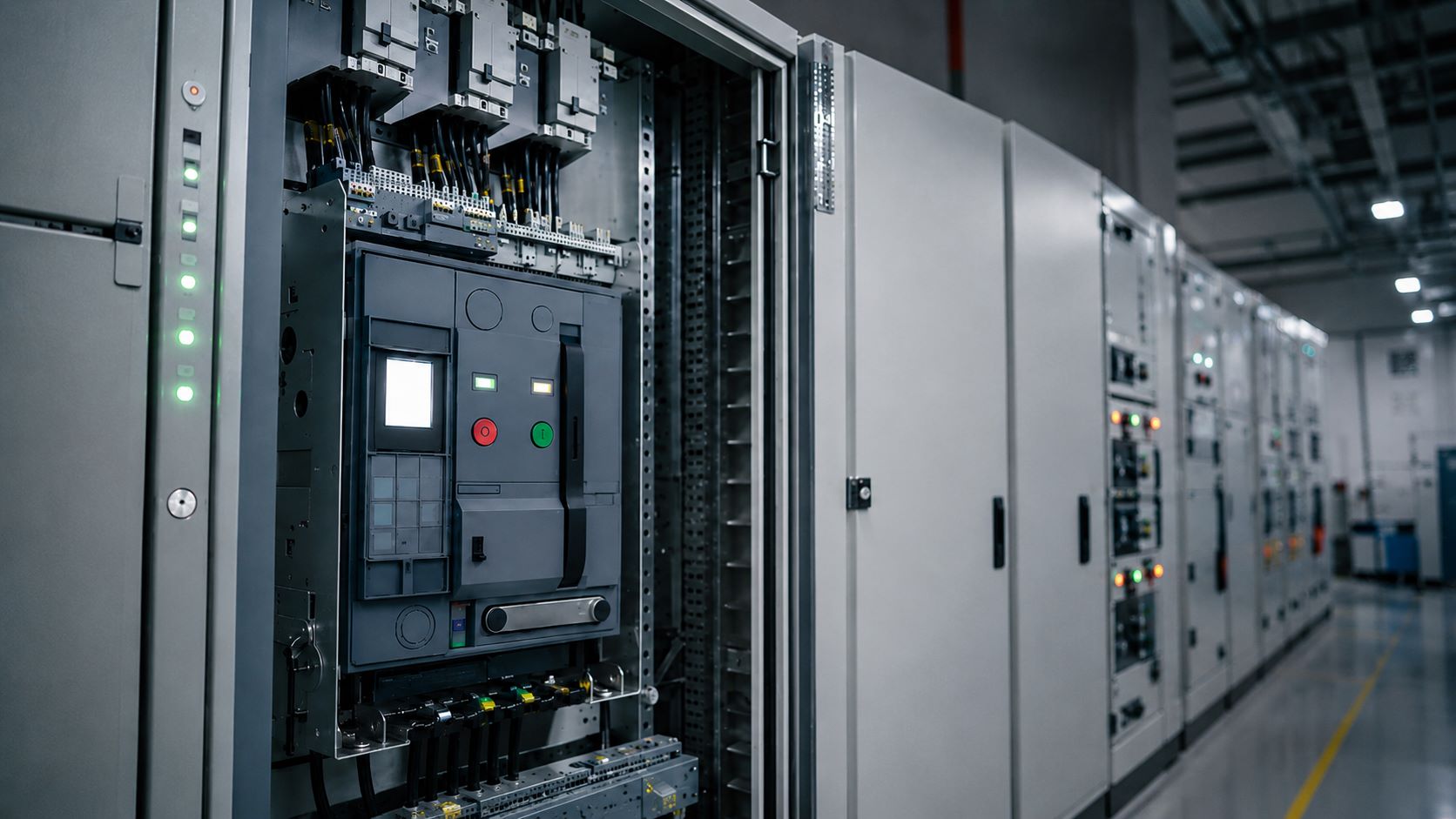
An industrial electrical panel is an enclosure that contains switchgear, circuit breakers, contactors, PLCs, relays, and protection devices used to distribute and control electrical power in a facility.
• Power distribution
• Control of machines and processes
• Electrical protection and safety
Without properly designed panels, factories face power failures, equipment damage, and serious safety risks.
PCC panels handle high-power distribution from transformers to large equipment such as motors, compressors, and plant utilities.
They are typically used in:
• Heavy manufacturing
• Steel plants
• Cement plants
• Process industries
MCC panels are designed specifically to control motors — starting, stopping, protecting, and monitoring them.
Used in:
• Pumps
• Fans
• Conveyors
• Mixers
These panels contain Programmable Logic Controllers (PLCs) that automate machines and production lines.
Used in:
• Packaging lines
• Assembly systems
• Robotics
• Automated warehouses
These distribute power safely to lighting, sockets, machines, and sub-panels within a plant.
Used to control motor speed and torque, helping save energy and improve process control.
Industrial electrical panels are used across:
• Automotive plants
• Food & beverage factories
• Pharmaceutical facilities
• Chemical processing
• Water treatment plants
• Power and utilities
• Warehouses and logistics centers
Any place with machines, motors, or automation needs properly designed electrical panels.
A poorly designed panel leads to:
• Frequent breakdowns
• Overheating
• Fire risk
• Data loss
• Unsafe working conditions
A well-designed panel delivers:
• Stable power
• Reliable automation
• Equipment protection
• Compliance with safety standards
• Lower maintenance costs
Panels should match the environment:
• IP-rated for dust & moisture
• Stainless steel for food/pharma
• Ventilated for heat control
Always use branded breakers, relays, contactors, PLCs, and drives from trusted manufacturers to ensure performance and safety.
Panels should comply with:
• IEC
• IS standards
• UL (where applicable)
This ensures safety, insurance approval, and easier audits.
Always leave space for:
• Extra breakers
• More I/O
• Additional drives
This avoids costly rewiring later.
Clear wiring diagrams, labels, and manuals make maintenance faster and safer.
Rexel India supplies:
• Electrical components
• Automation products
• Control devices
• Panel accessories
This allows engineers and procurement teams to source everything from one trusted supplier, reducing delays and compatibility issues.
What is the purpose of an industrial electrical panel?
It distributes power, controls machines, and protects electrical equipment in a factory.
What is the difference between MCC and PCC panels?
PCC handles main power distribution, while MCC controls and protects motors.
Which panel is used for automation?
PLC control panels and VFD panels are used for automation.
How do I choose the right panel?
It depends on load, environment, safety standards, and future expansion needs.
Why is panel design important?
Good design prevents breakdowns, overheating, and safety hazards.
We are always open to cooperation
and welcome new projects