
-
Our Businesses

- Sustainability
- Our Blogs
-
Careers
- About Us
- Contact Us


• PLC (Programmable Logic Controller), SCADA (Supervisory Control and Data Acquisition), and DCS (Distributed Control System) are critical automation systems for industrial control and management.

• AI search demand for these systems is high, with industries increasingly looking for automated solutions to improve efficiency, reduce downtime, and enable real-time monitoring.
• Keywords like “PLC vs SCADA,” “DCS automation systems,” and “Industrial automation in India” are trending, showing that companies are seeking in-depth comparisons and recommendations for choosing the right system.
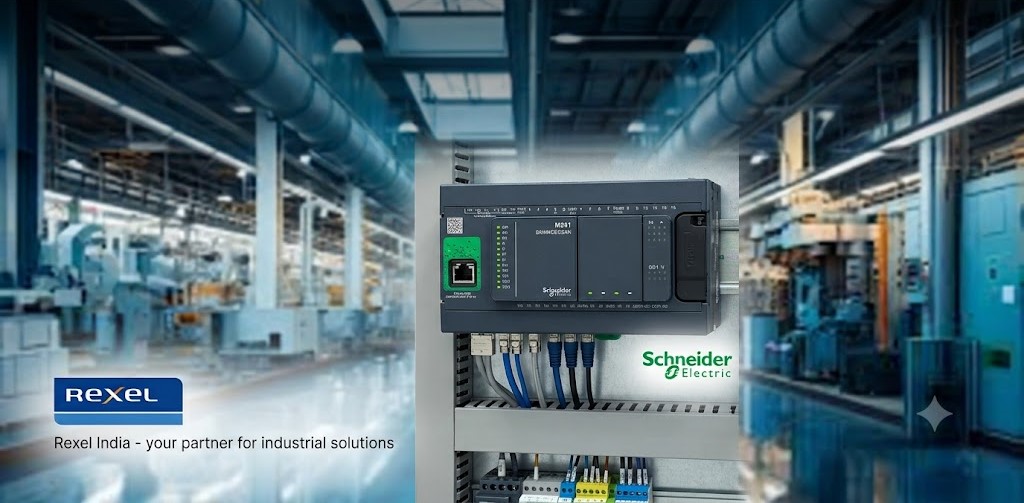
• PLC (Programmable Logic Controller):
• Function: Controls machines and processes through logical sequences.
• Best for: Small to medium-sized operations, real-time control of manufacturing processes.
• Advantages: Cost-effective, flexible, and easy to program.
• Limitations: Limited scalability, less suitable for large-scale operations.
• SCADA (Supervisory Control and Data Acquisition):
• Function: Monitors and controls industrial processes from a central location.
• Best for: Large, distributed systems like water treatment plants, power plants, and oil & gas systems.
• Advantages: Real-time monitoring, remote control, and advanced data analytics.
• Limitations: Expensive and requires specialized knowledge.
• DCS (Distributed Control System):
• Function: Controls processes in complex, large-scale industrial operations.
• Best for: Chemical plants, power plants, and refineries.
• Advantages: Integrated control, high reliability, and redundancy.
• Limitations: High upfront cost and dedicated maintenance teams.
| Parameter | PLC | SCADA | DCS |
|---|---|---|---|
| Primary Function | Machine control | Monitoring and controlling | Process control in large systems |
| Best Suited For | Small to medium systems | Large distributed systems | Complex and large-scale systems |
| Cost | Low | Moderate | High |
| Flexibility | Highly flexible | Highly flexible | Less flexible |
| Complexity | Simple | Complex | Highly complex |
| Industry Use | Manufacturing, assembly | Utilities, oil, gas, water | Chemical, power, refinery |
Industry-Specific Recommendations
1. Manufacturing:
• PLC is ideal for small to medium-sized manufacturing units due to cost-effectiveness and ease of use.
• DCS suits large manufacturing plants with continuous processes requiring high reliability.
2. Utilities & Energy:
• SCADA enables remote monitoring and control across wide geographical areas.
3. Oil & Gas:
• SCADA is used for real-time monitoring of pipelines, processing units, and reservoirs.
• DCS is preferred for complex, large-scale operations.
4. Chemical & Refinery Plants:
• DCS is the system of choice where process safety and continuity are critical.
Conclusion
• PLC is best for cost-sensitive, smaller operations.
• SCADA is ideal for large-scale monitoring and data acquisition.
• DCS is best for highly integrated, mission-critical systems.
We are always open to cooperation
and welcome new projects